An electric hot water tank emergency is any situation where your water heater is actively leaking, producing discolored or foul-smelling water, making loud banging or popping sounds, showing signs of electrical problems like tripped breakers or burning smells, or producing steam from the pressure relief valve. If any of these are happening, your first step is to shut off the power to the unit at the breaker panel and, if the tank is leaking, shut off the cold water supply valve at the top of the tank. Most electric hot water tank emergencies can be made safe with those two steps, but they still require a licensed plumber to diagnose and resolve. This post walks through every common emergency scenario, what to do in the moment, and how to tell whether your tank needs repair or replacement.
What Are the Signs of an Electric Hot Water Tank Emergency?
Not every water heater problem is an emergency. A slight temperature drop or a slow recovery time is worth monitoring but doesn’t require urgent action. The following signs, however, do require immediate attention.
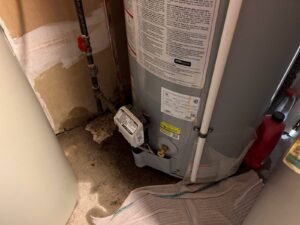
Water pooling around the base of the tank. Any visible leak or puddle at the base of your hot water tank should be treated as an emergency. A small leak can become a major flood quickly, especially if the tank wall has corroded through.
Tripped breaker that won’t stay reset. Electric water heaters should have a dedicated circuit breaker. If it trips once, resetting it is a reasonable first step. If it trips again, that may indicate a short circuit, a failed heating element, or a wiring problem. You should not keep resetting a breaker that keeps tripping. If determined to be an electrical problem, call an ESA registered electrician.
Burning smell or scorch marks near the unit. This indicates an electrical fault, potentially in the wiring, a thermostat, or a heating element. Shut off the breaker to the water heater immediately and do not restore power until a licensed plumber or electrician has inspected the unit.
Steam or hot water discharging from the temperature and pressure (T&P) relief valve. The T&P valve is a safety device designed to release pressure if the tank overheats or the internal pressure gets too high. If it’s actively discharging steam or scalding water, the tank is overheating or has a pressure regulation failure. Shut off the power and the cold water supply and call a plumber.
Rusty or discoloured hot water. If your hot water has a reddish-brown tint and your cold water is clear, the corrosion is likely inside the tank. This happens when the anode rod (a sacrificial component designed to corrode instead of the tank walls) is fully depleted and the tank itself has started rusting.
What Should You Do During an Electric Hot Water Tank Emergency?
The exact problem may vary, but your first steps are generally the same.
Think of this as the “Stop making things worse” portion of the emergency.
- Shut off the power. Go to your home’s electrical panel and turn off the breaker dedicated to the water heater. On most panels it will be labelled “Water Heater” or “HWT.” If you cannot find the breaker, call an ESA registered electrician.
- Shut off the water supply. At the top of the tank, there’s a cold water supply valve. Turn it clockwise to close it. This stops water from flowing into the tank and feeding a leak. If the valve is seized or you can’t reach it safely (for example, if there’s standing water near electrical components), shut off the main water supply to the house instead. If you have a ball valve shut off until the handle is perpendicular with the valve body.
- Do not touch the unit if there’s standing water around it. Water and electricity are a dangerous combination. If the floor around the tank is wet and the power hasn’t been confirmed off at the panel, stay clear of the area.
- Open a hot water faucet somewhere in the house once the supply is cut. This relieves pressure inside the tank and slows the flow from a leak by reducing the internal pressure pushing water out.
- Document the damage. Take photos of the leak, the water damage, and the tank itself. This documentation is valuable for insurance claims and for the plumber who comes to assess the situation.Because once the plumber gets there, “It was doing something weird and then there was water everywhere” isn’t nearly as helpful as having pictures.
- Call a licensed plumber.Tell the plumber what you’re seeing:
- Where the water is coming from
- Whether you’ve shut off the power
- Whether you’ve shut off the water
- Any unusual sounds
- Any unusual smells
- Whether there’s visible water damageThe more information you can provide, the better prepared the plumber can be before arriving.
How Long Does an Electric Hot Water Tank Last?
Electric hot water tanks typically last 10 to 15 years, although several factors can affect their lifespan. How often the tank is flushed, how many people live in the home, and whether the anode rod is replaced when required can all make a difference.
Electric tanks tend to outlast gas models because they have fewer combustion-related components. There’s no burner, no gas valve, and less thermal stress on the tank bottom, which means the primary failure mode for electric tanks is internal corrosion rather than heat-related wear.
If you don’t know how old your tank is, check the serial number on the manufacturer’s label. Most manufacturers encode the manufacture date in the first four characters of the serial number (often two letters for the month and two digits for the year). A quick search with the manufacturer’s name and “serial number decoder” will show you how to read it.
What Causes an Electric Hot Water Tank to Fail?
Understanding why tanks fail helps you recognize problems earlier and make better repair-vs-replace decisions.
Sediment buildup. In areas with hard water (Ottawa’s water supply contains moderate mineral content), calcium and magnesium settle at the bottom of the tank over time. This layer of sediment sits directly on top of the lower heating element in an electric tank, insulating it from the water and forcing it to work harder. The result is reduced efficiency, longer heating times, overheating of the element, and accelerated wear on the tank bottom. Annual flushing is the single most effective maintenance step for extending tank life.
Anode rod depletion. Every tank based water heater has a sacrificial anode rod, typically made of magnesium or aluminum, suspended inside the tank. Its job is to corrode so the tank walls don’t. Once the rod is fully consumed, the tank itself begins to rust from the inside. Checking and replacing the anode rod before it’s fully depleted can add years to the tank’s lifespan. Most manufacturers recommend inspecting it every two to three years.
Heating element failure. Electric tanks use one or two immersion heating elements. These elements can burn out, corrode, or short-circuit over time. A failed upper element means no hot water at all. A failed lower element means the tank recovers slowly and may not fully heat. Element replacement is a common and relatively straightforward repair for a licensed plumber, but only if the rest of the tank is still in good condition.
Thermostat failure. Electric tanks have two thermostats (upper and lower) that regulate the heating elements. A failed thermostat can cause the water to overheat (a safety hazard), fail to heat, or heat inconsistently. If the high-limit switch (the red reset button on the upper thermostat) trips repeatedly, that’s a sign of thermostat or element failure.
Internal corrosion. Once the anode rod is depleted and the tank lining begins to deteriorate, corrosion is irreversible. Rusty hot water, pinhole leaks, and eventual tank failure follow. At this stage, the tank needs replacement, not repair.
Should You Repair or Replace Your Electric Hot Water Tank?
This is the question almost every homeowner asks when their water heater starts acting up.
The answer depends on the tank’s age, the problem, and the cost of the repair compared with replacement.
Repair makes sense when:
- The tank is under 8 years old
- The problem is a replaceable component such as an element, thermostat, T&P valve, or anode rod
- The tank itself is structurally sound
- There are no visible signs of serious corrosion or leaking
- The repair cost is well below half the cost of a new tank
Replacement makes sense when:
- The tank is 10 years or older
- The tank is leaking from the body itself
- The interior is heavily corroded
- The unit has required multiple repairs in recent years
- The tank is producing significantly less hot water than it used to
A planned replacement also lets you research options, compare efficiency ratings, and schedule the installation on your terms instead of scrambling for an emergency call when the tank fails on a weekend or holiday.
What Maintenance Extends the Life of an Electric Hot Water Tank?
Routine maintenance can make a huge difference in the lifespan of your water heater.
Most of these tasks are straightforward, and a licensed plumber can take care of them during an annual service visit.
Flush the tank annually
Draining several litres from the bottom of the tank helps remove sediment before it hardens and causes damage.
This is one of the most impactful maintenance steps you can take.
Inspect the anode rod every two to three years
Replace it when it’s significantly corroded.
A new anode rod is inexpensive compared with replacing an entire water heater.
Test the T&P relief valve annually
Lift the lever briefly and confirm that water flows freely, then let it snap back.
If it drips continuously afterward, or no water flows when you lift the lever, the valve needs replacement.
Check the thermostat settings
The minimum recommended setting is 49°C (120°F).
Higher settings can accelerate sediment buildup, increase energy costs, and raise the risk of scalding.
120°F also helps prevent dangerous bacteria such as those associated with Legionnaires’ disease.
Inspect for leaks
During every maintenance visit, check:
- The fittings on top of the tank
- The T&P valve discharge pipe
- The base of the tank
Finding a small problem early is considerably better than finding it because you’re suddenly standing in several inches of water.
How We Handle an Electric Hot Water Tank Emergencies
At Rhino Plumbing, we service electric hot water tank emergencies across Kanata, Stittsville, and the greater Ottawa area. Whether your tank is leaking, producing discolored water, making alarming noises, or has stopped heating entirely, we can diagnose the problem and walk you through your options clearly.
And if you’re staring at your water heater wondering:
“Is this actually an emergency, or am I overreacting?”
That’s exactly what our Virtual Plumber service is for.
Connect with a Red Seal certified plumber over video call, point your phone at the tank, and get an honest assessment of what’s happening and what needs to happen next.
Dealing with a hot water tank emergency? Call us directly for immediate service in Kanata, Stittsville, and across Ottawa. Not sure if it’s an emergency? Start with a Virtual Plumber call for a quick assessment