
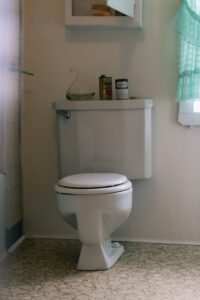
If your toilet keeps clogging, leaks from the base, runs constantly after flushing, or has visible cracks in the bowl or tank, it may be time to replace it. Not every toilet problem means you need a new one. A running toilet might just need a $10 flapper. A wobbly seat might just need tighter bolts. But when problems stack up, repairs stop holding, or the porcelain itself is damaged, replacement is the faster and cheaper path. This post walks through the most common toilet issues, which ones are worth repairing, and which ones mean it’s time to replace your toilet entirely.
How Long Should a Toilet Last?
Toilets are durable. The porcelain body can last decades. Internal components do tend to wear out much sooner but that is to be expected.
The fill valve, flapper, handle, and wax seal are all consumable parts. They’re designed to be replaced periodically.
You should consider replacing the toilet itself when the porcelain is cracked, the bowl or tank can’t hold water reliably, the fixture won’t stabilize on the floor, or it’s old enough that it wastes water by design. Most households never end up seeing the full lifespan of a toilet as on average toilets are replaced every 10 to 15 years as part of a renovation, often avoiding costly damages from water leaks.
When Should You Repair Your Toilet Instead of Replacing It?
Some problems are quick, cheap fixes. Start here before assuming you need a new toilet.
The toilet runs after flushing. This is almost always a flapper or fill valve issue. The flapper is a rubber seal at the bottom of the tank. It lifts when you flush and drops back to seal the tank. Over time it warps, hardens, or collects mineral buildup. A new flapper costs a few dollars and takes minutes to install. If replacing the flapper doesn’t stop the running, the fill valve may also need replacing. Both are standard parts available at any hardware store.
The toilet wobbles slightly. Tighten the floor bolts at the base first. If that fixes it, you’re done. If it still rocks, the wax seal underneath may have compressed or failed. Replacing a wax seal requires lifting the toilet off the floor, but it’s a common repair and doesn’t mean the toilet itself is bad.
A single clog. Every toilet clogs occasionally. That’s normal. A plunger handles most of them. If a plunger doesn’t clear it, a plumber can snake the line. One clog is not a reason to replace anything.
Water level in the bowl is low. This usually means the fill valve isn’t refilling the bowl properly after a flush. A fill valve replacement solves it. If the water level is low and you see water on the floor, though, that’s a different problem. You may have a crack or a failed seal.
The handle sticks or feels loose. The handle connects to a lift arm and chain inside the tank. All of these parts are replaceable. A sticky or floppy handle is a $15 repair, not a reason for a new toilet.
When Is It Time to Replace Your Toilet?
These are the situations where repair no longer makes sense.
Cracks in the bowl or tank. This is the clearest sign. Any crack in the porcelain, even a hairline fracture, will get worse over time. Porcelain cannot be reliably repaired. A cracked tank can fail suddenly and release its full contents onto your bathroom floor. A cracked bowl can leak sewage. If you see a crack, stop using the toilet and plan for replacement.
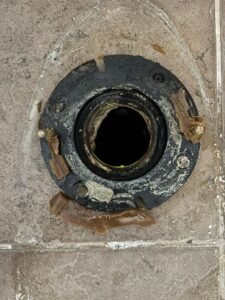
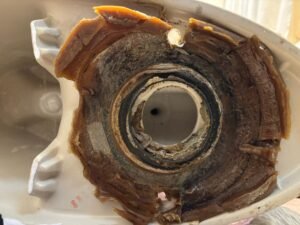
Leaking from the base that won’t stop. A leak at the base often starts as a wax seal issue. If a new wax seal doesn’t fix it, the toilet flange (the fitting that connects the toilet to the drain pipe in the floor) may be damaged. Or the base of the toilet itself may be cracked in a spot that’s hard to see. If the leak comes back after a seal replacement, the toilet needs to go.
Constant clogging despite normal use. If your toilet clogs regularly and you’re not flushing anything unusual, the toilet itself may be the problem. Older models sometimes have narrower trapways that can’t handle modern low-flow volumes. If snaking and cleaning don’t stop the pattern, a new toilet with a better flush design will.
It’s been repaired multiple times and still doesn’t work right. At some point, the math tips. If you’ve replaced the flapper, the fill valve, the wax seal, and the handle in the past year, and the toilet is still giving you trouble, you’re spending repair money on a fixture that’s telling you it’s done.
It won’t stabilize on the floor. If the toilet rocks or shifts after tightening the bolts and replacing the wax seal, the subfloor underneath may be water damaged. A toilet that moves during use will eventually break its seal and leak. This often means the floor needs repair and the toilet needs replacement at the same time.

Is Your Toilet Wasting Water?
Older toilets use significantly more water per flush than modern models.
Toilets manufactured before 1994 commonly use 13 litres per flush or more. As stated by the National Research Council of Canada (NRC) current plumbing codes in Canada require toilets to use no more than 6 litres per flush, and many high-efficiency models use 4.8 litres or less.
That difference adds up. A household of four can save tens of thousands of litres per year by switching from an older toilet to a modern high-efficiency model.
If your toilet was installed before the mid-1990s, it’s worth replacing for the water savings alone, even if it still technically works. Your water bill will reflect the change.
Does Ottawa’s Hard Water Affect Your Toilet?
Yes. Ottawa’s municipal water supply contains moderate levels of calcium and magnesium. This mineral content affects toilets in two ways.
First, mineral deposits build up inside the tank, on the flapper, on the fill valve, and around the rim jets (the small holes under the rim that direct water during a flush). Over time, this buildup reduces flushing power. Rim jets clogged with scale can’t direct water properly, and the flush becomes weak or incomplete.
Second, mineral buildup accelerates wear on internal components. Flappers harden faster. Fill valves clog sooner. Seals deteriorate more quickly. If you’re replacing internal parts more often than expected, hard water is likely a contributing factor.
How to Check for a Silent Leak
A silent leak wastes water constantly without any obvious sign. Your toilet looks fine. Sounds fine. But water is slowly draining from the tank into the bowl around the clock.
Here’s a simple test. Remove the tank lid. Add a few drops of food colouring to the water in the tank. Wait 15 to 20 minutes without flushing. If the water in the bowl changes colour, the flapper is leaking.
Start by replacing the flapper. If the leak continues after a new flapper is installed, the flush valve seat (the surface the flapper seals against) may be corroded or pitted. At that point, the repair becomes more involved and replacement may be the more practical option.
A leaking flapper can waste hundreds of litres of water per day. Even if you don’t notice it, your water bill does.
What to Expect During a Toilet Replacement
Toilet replacement is a straightforward job for a licensed plumber. Knowing what the process involves helps set expectations.
The plumber shuts off the water supply to the toilet and disconnects the supply line. The tank is emptied. The toilet is unbolted from the floor and removed. The old wax seal is scraped off and the flange is inspected. If the flange is in good condition, a new wax ring (or a wax-free gasket) is placed, and the new toilet is set, levelled, bolted, and connected.
The whole process typically takes one to two hours. In most cases, the toilet is usable immediately after installation.
How to Book a Toilet Replacement in Kanata or Stittsville
If your toilet is showing any of the signs above, we can help. We handle toilet replacements every day.
Not sure whether your toilet needs repair or replacement? Our Virtual Plumber service lets you show a Red Seal certified plumber the problem over video call. Point your phone at the issue, describe what’s happening, and get a clear answer before booking anything.