Most water heater problems have a fixable cause. If your water heater stops producing hot water, runs out faster than it used to, makes unusual sounds, or shows signs of leaking, it doesn’t automatically mean you need a new unit. Many of the most common water heater issues in Ottawa homes come down to a worn-out component that a licensed plumber can replace in a single visit. This post covers the problems homeowners run into most often, which ones are straightforward repairs, which ones signal something more serious, and how to know when a water heater repair no longer makes sense and replacement is the better path.
What Are the Most Common Water Heater Problems?
Water heaters are relatively simple systems with a limited number of parts that can fail. Understanding what goes wrong helps you describe the issue accurately when you call a plumber, which means a faster diagnosis and fewer surprises.
No hot water at all. In an electric water heater, this usually points to a tripped breaker, a failed heating element, or a thermostat that has stopped functioning. The upper heating element controls initial heating, so when it fails, the tank produces no hot water rather than just less of it. In a gas unit, a failed pilot light, thermocouple, or gas valve can cause a complete loss of hot water.
Hot water runs out too quickly. If the tank heats but doesn’t hold temperature as long as it used to, the lower heating element may have failed (in electric models) or sediment has built up at the bottom of the tank, reducing the effective capacity and insulating the heating source from the water. A 50-gallon tank with a few inches of hardened sediment at the bottom isn’t really a 50-gallon tank anymore.
Inconsistent water temperature. Temperature swings between hot and lukewarm often point to a failing thermostat that’s sending incorrect signals to the heating element. In some cases, a dip tube failure can also cause this. The dip tube directs cold incoming water to the bottom of the tank, and when it breaks, cold water mixes with the hot water at the top, creating unpredictable temperatures at the tap.
Strange noises from the tank. Popping, rumbling, cracking, or banging sounds are almost always caused by sediment buildup. Water trapped under layers of hardened mineral deposits boils and creates these noises. It sounds alarming, but the fix is often a professional flush. If the sediment has hardened to the point where flushing doesn’t clear it, the tank may be too far gone for that repair to help.
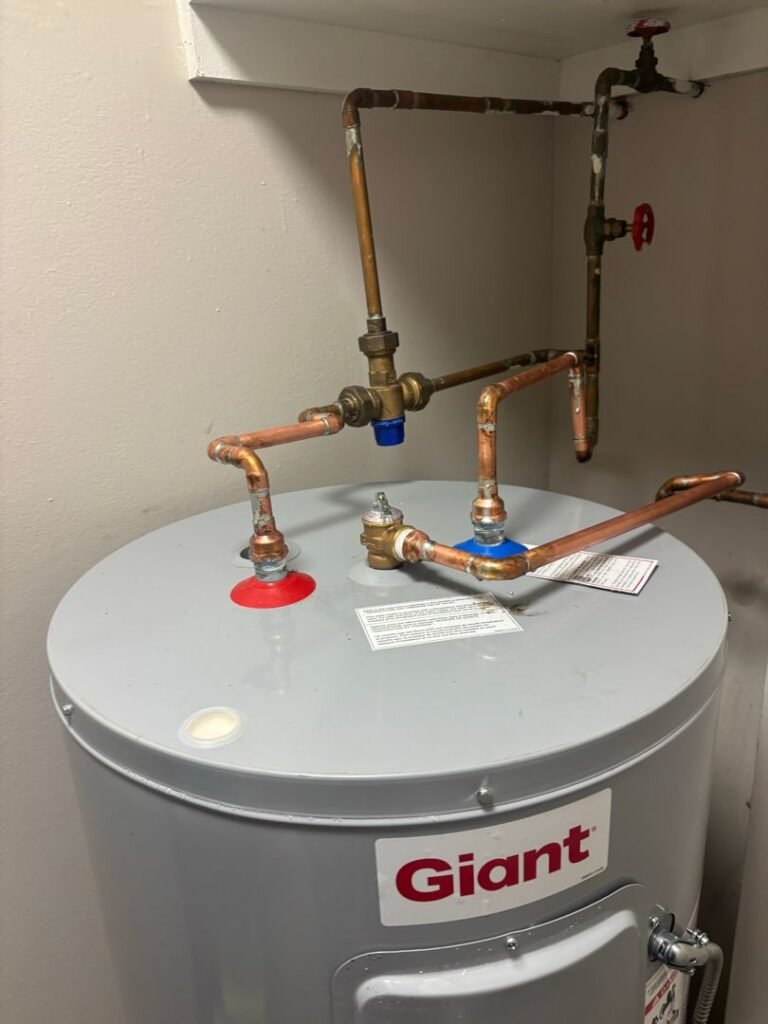
Water leaking from the tank or fittings. Where the leak is coming from matters. A leak from a fitting, valve, or connection on top of the tank is usually repairable. A leak from the body of the tank itself, especially at the base, typically means internal corrosion has compromised the tank wall. That’s a replacement situation, not a repair.
Rusty or discoloured hot water. If the hot water is reddish-brown and the cold water is clear, the corrosion is happening inside the tank. This usually means the anode rod has been fully depleted and the tank walls are corroding. Catching this early enough means an anode rod replacement can slow the process. Catching it late means the damage is irreversible.

Which Water Heater Repairs Are Worth Doing?
Not every problem means the tank is finished. Several of the most common failures involve inexpensive, replaceable parts that a licensed plumber can swap out in under an hour.
Heating element replacement. Electric water heaters use one or two immersion elements. When one fails, the symptoms are clear: no hot water (upper element) or slow recovery and lukewarm output (lower element). Elements are a standard repair part, and replacing one is straightforward as long as the rest of the tank is in decent condition.
Thermostat replacement. Electric tanks have an upper and lower thermostat that control the elements. A failed thermostat can cause overheating, underheating, or inconsistent temperature. Thermostats are inexpensive to replace and the repair is quick.
Anode rod replacement. The anode rod is a sacrificial component that corrodes so the tank walls don’t. Most manufacturers recommend inspecting it every two to three years and replacing it when it’s significantly depleted. A new anode rod is one of the cheapest ways to extend the life of a water heater. If the rod is gone and the tank is already rusting internally, though, the opportunity has passed.
T&P valve replacement. The temperature and pressure relief valve is a safety device. If it drips constantly or doesn’t release water when the lever is lifted, it needs replacing. This is a standard repair.
Dip tube replacement. A broken dip tube causes cold and hot water to mix inside the tank, resulting in lukewarm output. The tube itself is inexpensive and the repair is manageable for a licensed plumber.
Sediment flushing. Annual flushing removes mineral buildup before it hardens and causes performance issues. If your tank has never been flushed, a professional flush can restore lost capacity and reduce the stress on your heating elements. Ottawa’s water supply contains moderate mineral content, which means sediment accumulates faster here than in areas with softer water.
When Does Water Heater Repair Stop Making Sense?
There’s a point where continuing to repair an aging water heater costs more in accumulated service calls than replacing it would. Knowing where that line is saves you money and frustration.
The tank is leaking from the body. A leak from the tank wall itself, rather than from a fitting or valve, means internal corrosion has eaten through the steel. This cannot be repaired. The tank needs to be replaced.
The unit is over 10 years old and having repeated issues. Water heaters don’t last forever. Electric tanks typically last 10 to 15 years, and once a tank enters the second half of its expected lifespan, the probability of failure increases. If you’ve already replaced the element and the thermostat in the past two years, the next failure is a matter of when, not if.
Repair cost approaches half the cost of a new unit. This is a practical threshold. If a repair is going to cost you close to 50% of what a new water heater would cost installed, the new unit gives you a full warranty, a fresh lifespan, and better efficiency. The repair gives you a few more months from an aging system.
The tank produces rusty water despite a functional anode rod. If you’ve replaced the anode rod and the water is still discoloured, the tank walls are corroding from the inside. That process is irreversible and the tank will eventually fail.
You’re spending more on energy than you should be. Older water heaters, particularly those manufactured before current efficiency standards, use more energy to produce the same amount of hot water. A new unit with a higher energy factor can reduce your monthly heating costs enough to offset part of the replacement cost over time.
What Should You Expect During a Water Heater Repair Visit?
Knowing what happens during a repair visit removes the uncertainty and helps you ask the right questions.
The plumber starts with a diagnostic inspection. They check the power supply or gas connection, test the thermostat and heating elements, inspect the anode rod condition if accessible, check the T&P valve, look for leaks at every connection point, and assess the overall condition of the tank.
Once the problem is identified, the plumber explains what’s wrong, what the repair involves, and what it will cost before any work begins. A good plumber gives you a clear recommendation and lets you make the decision. If the repair doesn’t make financial sense given the age of the tank, they’ll tell you that too.
Most common water heater repairs are completed in a single visit. Element replacements, thermostat swaps, valve replacements, and flushing can all be done on site with standard parts.
How Does Ottawa’s Water Affect Your Water Heater?
Ottawa’s municipal water supply contains moderate levels of calcium and magnesium. These minerals settle at the bottom of your water heater tank over time, forming a layer of sediment that reduces performance and shortens the life of the unit.
In an electric water heater, sediment sits directly on top of the lower heating element. It acts as an insulator, forcing the element to work harder and run longer to heat the water above it. This accelerates element burnout and increases energy consumption. In gas water heaters, sediment builds up on the bottom of the tank above the burner, creating hot spots that weaken the tank floor over time.
Annual flushing is the single most effective step for preventing sediment-related problems. It’s a quick maintenance task that a licensed plumber can handle during a routine visit, and it’s far cheaper than the repairs that result from years of neglected buildup.
How to Book a Water Heater Repair in Kanata or Stittsville
We handle water heater repairs for units across Kanata, Stittsville, and the greater Ottawa area. Whether your tank has stopped heating, is leaking, is making noise, or just isn’t performing the way it used to, we diagnose the problem and walk you through your options before any work starts.
If you’re not sure whether your water heater needs repair or whether the issue is something simpler, our Virtual Plumber service gives you a fast way to find out. Connect with a Red Seal certified plumber over video call, describe what’s happening, and get a clear recommendation before scheduling anything.