
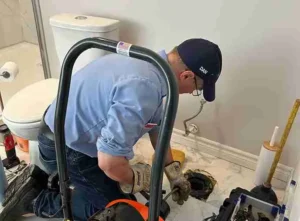
A drain camera inspection gives you a real-time, high-definition view of the inside of your sewer
and drain pipes. Using a small waterproof camera attached to a flexible cable, a licensed
plumber can see exactly what’s happening below ground without digging anything up. The
camera reveals blockages, tree root intrusion, cracks, pipe corrosion, collapsed sections,
grease buildup, bellied (sagging) pipe segments, and misaligned joints. For homeowners in
Kanata and Stittsville, a drain camera inspection is one of the most cost-effective diagnostic
tools available, especially for recurring drain problems, pre-purchase home inspections, or any
situation where the cause of a plumbing issue isn’t obvious from the surface.
How Does a Drain Camera Inspection Work?
A plumber inserts a small, waterproof camera on a flexible cable into your drain or sewer line
through an access point, typically a cleanout or floor drain. The camera travels through the pipe
while sending live video to a monitor, allowing the plumber to see the interior condition of the
pipe in real time.
The process is straightforward. The plumber identifies the best access point, feeds the camera
into the line, and guides it through the entire length of the pipe. As the camera moves, the
plumber watches the feed and notes any issues: blockages, damage, root intrusion, or
deterioration. Many professional camera systems also include a locating device (called a sonde)
that transmits a signal so the plumber can mark the exact location and depth of a problem from
above ground.
Most residential inspections take less than an hour. When the inspection is complete, the
plumber reviews the findings with you, often playing back specific sections of footage, and
provides a clear recommendation on next steps. Some plumbers also provide a digital recording
of the inspection for your records, which can be useful for insurance claims or real estate
transactions.
What Can a Sewer Camera Find?
A drain camera can identify a wide range of issues that would otherwise be invisible without
excavation. Here’s what a plumber is looking for when they send a camera through your pipes.
Tree root intrusion is one of the most common findings, particularly in older neighbourhoods
with mature landscaping. Tree roots naturally seek out moisture, and they can enter sewer pipes
through tiny cracks or joint connections. Once inside, they grow and expand, causing blockages
that get worse over time. In Kanata and Stittsville, properties with large trees near the sewer line
are at higher risk.
Cracks and fractures in the pipe wall show up clearly on camera. These can result from age,
ground shifting, freeze-thaw cycles (common in Ottawa), or external pressure from construction
or heavy loads above the pipe. Small cracks can be monitored; larger fractures may require
repair or replacement.
Pipe corrosion is most common in older cast iron or galvanized steel pipes. The camera
reveals interior rust, scaling, and thinning pipe walls that indicate the pipe is nearing the end of
its lifespan.
Collapsed or sagging sections (called bellies) occur when a section of pipe settles lower than
the surrounding segments. Waste and water collect in the low point instead of flowing through,
leading to recurring backups and blockages.
Grease and debris buildup restricts flow and leads to slow drainage. The camera shows
exactly where and how severe the buildup is, which helps determine whether a standard drain
cleaning or hydro jetting is the right solution.
Misaligned joints happen when pipe sections shift apart over time due to ground movement.
The offset creates a lip inside the pipe that catches debris and causes blockages.
Foreign objects lodged in the pipe are occasionally discovered during inspections. Items that
were flushed or washed down a drain can become stuck at a bend or joint and cause chronic
drainage issues.
What Can’t a Drain Camera Detect?
Being honest about the camera’s limitations is important. A drain camera sees the inside of the
pipe, not the outside. That means it can identify cracks and damage that may be causing leaks,
but it cannot directly confirm that a pipe is leaking. Water escaping through a crack exits through
the outside of the pipe, which the camera can’t see.
If a plumber suspects a leak based on what the camera shows, additional testing methods like a
hydrostatic pressure test or smoke test may be recommended to confirm it. A camera inspection
is a diagnostic starting point, not always the final word.
The camera also can’t see through heavy blockages. If the pipe is completely obstructed, the
camera may only be able to inspect up to the blockage point. In those cases, the plumber may
need to clear the blockage first (through snaking or jetting) and then run the camera again to
inspect the pipe beyond it.
How Much Does a Drain Camera Inspection Cost?
In Canada, a standard drain camera inspection typically costs between $325 and $600. The
price depends on the length of the pipe, accessibility of the cleanout, whether locating
equipment is needed, and whether the inspection includes a digital recording or written report.
A basic inspection of an accessible residential line falls on the lower end of that range. Longer
sewer lines, difficult access points, or inspections that require a detailed report for a real estate
transaction or insurance claim will be closer to the higher end.
To put that cost in perspective: sewer line repair or replacement in Ontario typically runs $5,000
to $25,000 or more depending on the length, depth, and method. A camera inspection costing a
few hundred dollars can catch a problem early when a targeted repair is still an option, before it
escalates into a full replacement.
Some plumbing companies include the camera inspection as part of a larger drain cleaning
service. Others charge for it as a standalone diagnostic. Ask upfront what’s included so you
know what you’re paying for.
Is a Drain Camera Inspection Worth It?
Yes. A camera inspection eliminates guesswork. Without one, a plumber diagnosing a drain
problem is working from symptoms alone: slow drains, backups, odours. Those symptoms can
have multiple causes, and the wrong diagnosis means the wrong fix, which means you pay
twice.
With a camera, the plumber sees the problem directly. Root intrusion looks different from grease
buildup. A cracked pipe looks different from a bellied section. A misaligned joint looks different
from a collapsed pipe. Each of these requires a different repair approach, and the camera
makes sure the recommendation matches the actual condition.
For the cost of the inspection, you get a precise diagnosis, a targeted repair plan, and the
confidence that you’re not paying for unnecessary work. That’s the value.
Should You Get a Sewer Inspection Before Buying a Home?
Absolutely. Standard home inspections do not include the sewer line. The inspector checks
visible plumbing inside the house, but the buried sewer lateral connecting your home to the
municipal system is outside the scope of a general inspection.
That’s a significant gap. In Ontario, approximately 14% of home sales fall through due to issues
found during inspection, and plumbing problems are consistently among the top concerns. A
sewer line problem discovered after closing becomes the buyer’s responsibility, and
replacement costs can easily reach $5,000 to $20,000 or more.
A pre-purchase sewer camera inspection costs a few hundred dollars and gives you clear
documentation of the pipe’s condition before you sign. If the inspection reveals a problem, you
can negotiate with the seller for a repair, a price reduction, or a credit. If the pipe is in good
condition, you close with confidence.
This is especially relevant in Kanata and Stittsville, where the housing market includes
everything from newer builds with PVC piping to established homes from the 1970s and 1980s
with aging clay or cast iron laterals. The older the home, the more important the inspection.
What Is the Difference Between Drain Snaking and Hydro
Jetting?
These are two different drain cleaning methods, and a camera inspection is often what
determines which one is appropriate.
Drain snaking uses a flexible metal cable with a cutting head to break through a clog. It’s
effective for straightforward blockages like hair, soap buildup, or small root intrusions. Snaking
clears a path through the obstruction, but it doesn’t clean the pipe walls. Think of it as poking a
hole through the problem.
Hydro jetting uses high-pressure water to scour the entire interior surface of the pipe. It
removes grease, scale, mineral buildup, and roots more thoroughly than snaking. It restores the
pipe closer to its original diameter. Think of it as pressure washing the inside of the pipe.
Hydro jetting is the more thorough cleaning method, but it costs more and isn’t always
necessary. A camera inspection before cleaning shows the plumber what’s in the pipe and how
severe the buildup is, which determines whether snaking will handle it or whether jetting is the
better option. A camera inspection after cleaning confirms that the pipe is fully cleared and that
no underlying damage was hidden behind the buildup.
What Happens After the Inspection?
Once the camera inspection is complete, your plumber will review the footage with you and
explain what they found. A good plumber will show you the relevant sections of video, point out
any issues, and give you a clear recommendation.
The outcome falls into one of a few categories. The pipe is clean and in good condition, and no
action is needed. The pipe has buildup that needs cleaning (snaking or jetting). The pipe has
localized damage that can be repaired with a spot fix or a trenchless method. Or the pipe has
significant damage or deterioration that requires section replacement or full replacement.
In every case, you’re making your decision based on what the camera actually showed, not on
guesswork. You have the footage, you understand the condition, and you can weigh the options
with real information.
Not sure if you need a drain camera inspection? Start with a Virtual Plumber call.
Describe your symptoms to a Red Seal certified plumber over video, and we’ll help you
determine whether a camera inspection is the right next step.